The Reality of Painting a Brick House Exterior
Brick house exterior paint is a long-term commitment that protects your masonry, changes your home’s appearance, and requires the right products and preparation to hold up over time.
Here is a quick summary of what you need to know:
| Topic | Key Point |
|---|---|
| Best paint type | 100% acrylic latex or elastomeric masonry paint |
| Primer required | Yes, always on raw or weathered brick |
| Lifespan | 7-15 years with proper prep and maintenance |
| Reversible? | No. Painting brick is essentially permanent |
| Top colors | Alabaster, Seapearl, Iron Ore, Repose Gray |
| DIY or pro? | Professional application strongly recommended |
Painting brick is not a weekend project you can undo. It changes your home’s exterior for good, and how well it holds up depends almost entirely on preparation and product selection. Done right, it protects your masonry, boosts curb appeal, and adds real value. Done wrong, it traps moisture and leads to peeling, cracking, and costly repairs.
Since 1996, our team has worked on brick house exterior paint projects across Carmel and the wider Hamilton County area. In this guide, we’ll walk you through everything a property owner needs to know to make a confident, informed decision.
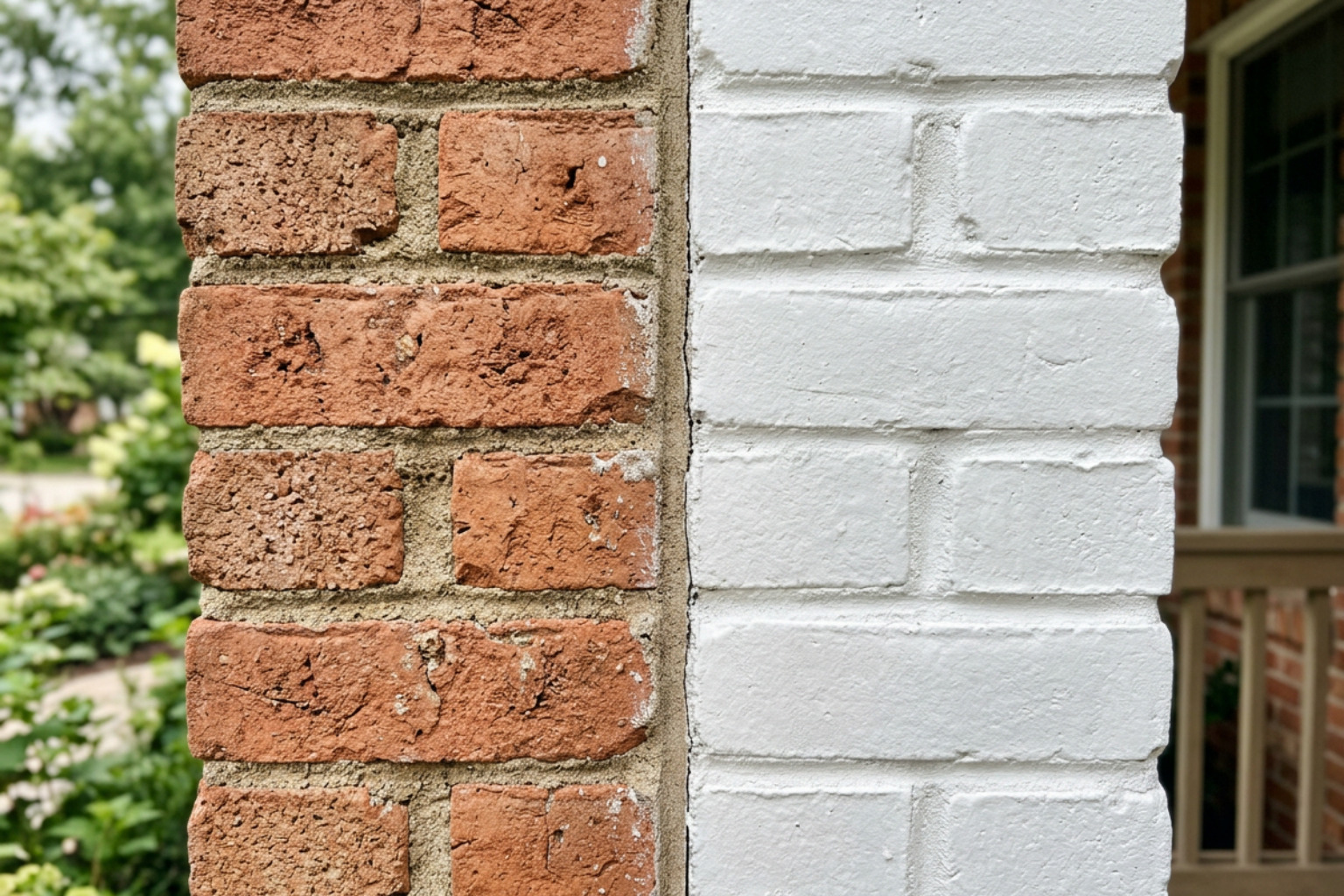
When we discuss a brick house exterior paint project with a homeowner in Carmel, the first thing we establish is that this is a permanent change. Brick is a naturally porous material. Once you apply a film-forming coating, you are changing the way that wall breathes. It is a significant architectural decision that requires a high level of technical understanding.
The primary concern with masonry is moisture migration. Water can enter a brick wall through small cracks in the mortar or through the ground via capillary action. If the wrong paint is used, that moisture gets trapped behind the paint film. When the temperature drops in Hamilton County, that trapped water freezes and expands, which can cause the paint to peel or, worse, cause the face of the brick to pop off. This is known as spalling.
We follow industry standards such as the HUD Masonry Repair guidelines to ensure the structural integrity of the home is never compromised. A professional application focuses on using breathable coatings that allow water vapor to escape while preventing liquid water from entering. This balance is what separates a high-end professional finish from a failure that occurs after just one or two seasons.
Pros and Cons of Masonry Coatings
Painting your brick offers an immediate boost in curb appeal. It can take a dated, dark red 1970s ranch and turn it into a clean, modern estate. Beyond aesthetics, a high-quality coating provides a layer of protection against the elements. It seals the brick against wind-driven rain and helps prevent the growth of mildew and algae, which are common in shaded areas of Indiana properties.
However, the irreversible nature of the work is a serious consideration. Removing paint from brick is an expensive, abrasive process that often damages the original texture of the masonry. You are also moving from a zero-maintenance surface to one that requires a maintenance cycle. While a professional job lasts a long time, you will eventually need to plan for a refresh to keep the home looking its best.
Regional Climate Considerations in Carmel
In Central Indiana, our weather is the biggest challenge for any exterior coating. We experience extreme freeze-thaw cycles where the temperature can swing 40 degrees in a single day. This causes the brick and the mortar joints to expand and contract.
Humidity levels in Fishers and Zionsville also play a role. High humidity during the application phase can affect drying times and adhesion. We only schedule these projects when the weather window is optimal – typically when temperatures are consistently above 50 degrees and the brick has had ample time to dry after any rain. Thermal expansion is a reality for masonry, and the coating system must be flexible enough to move with the house without cracking.
Selecting the Right Coating Systems

Choosing the right brick house exterior paint is a technical process. We do not use standard house paint for masonry. Instead, we rely on specialized systems designed for the unique pH and porosity of brick.
The most common professional choices are 100% acrylic latex paints and elastomeric coatings. Acrylic latex is highly breathable and offers excellent color retention. Elastomeric paints are much thicker and are designed to bridge small cracks, providing a waterproof barrier that is still vapor-permeable. We also look for products that carry the UL GREENGUARD certification for lower environmental impact and better air quality during the curing process.
Performance Standards for Brick House Exterior Paint
We evaluate every product based on ASTM standards for exterior coatings. This includes testing for crack bridging, which is the ability of the paint to stretch over a hairline fracture in the mortar without breaking. UV resistance is also vital. The sun hitting the south side of a home in Hamilton County can be intense, and the paint must resist fading and chalking over time. For more on how we select these systems, you can view our Exterior Painting service standards.
Primer Requirements for Porous Surfaces
Primer is not optional when painting brick. It serves as the bridge between the raw masonry and the topcoat. We use masonry conditioners or high-hide primers that are specifically formulated to handle the high alkalinity of new or weathered brick.
A quality primer also controls efflorescence. This is the white, powdery salt that sometimes appears on the surface of brick. If you don’t seal the brick properly, those salts can push the paint off the wall from the inside out. The primer promotes adhesion, ensuring the topcoat stays bonded for its full expected lifespan.
Professional Preparation and Application Standards
The success of a brick house exterior paint project is 90 percent preparation. We never simply show up and start painting. The process begins with a thorough inspection of the masonry and mortar joints.
Any damaged mortar must be repaired through tuckpointing before we begin. We also check for any structural cracks that might indicate foundation movement. If the surface isn’t sound, the paint won’t be either.
Surface Cleaning and Repair
We use professional Pressure Washing to remove dirt, mold, and loose debris. However, we keep the pressure low – typically below 1,500 PSI – to avoid damaging the mortar. After washing, the brick must dry completely. This often takes several days of clear weather. Applying paint to damp brick is a recipe for immediate failure.
Once dry, we use high-quality acrylic caulk to seal gaps around windows, doors, and trim. This prevents moisture from getting behind the brick veneer. Every step is designed to maintain the structural integrity of the home while preparing it for a flawless finish.
Application Techniques for Textured Masonry
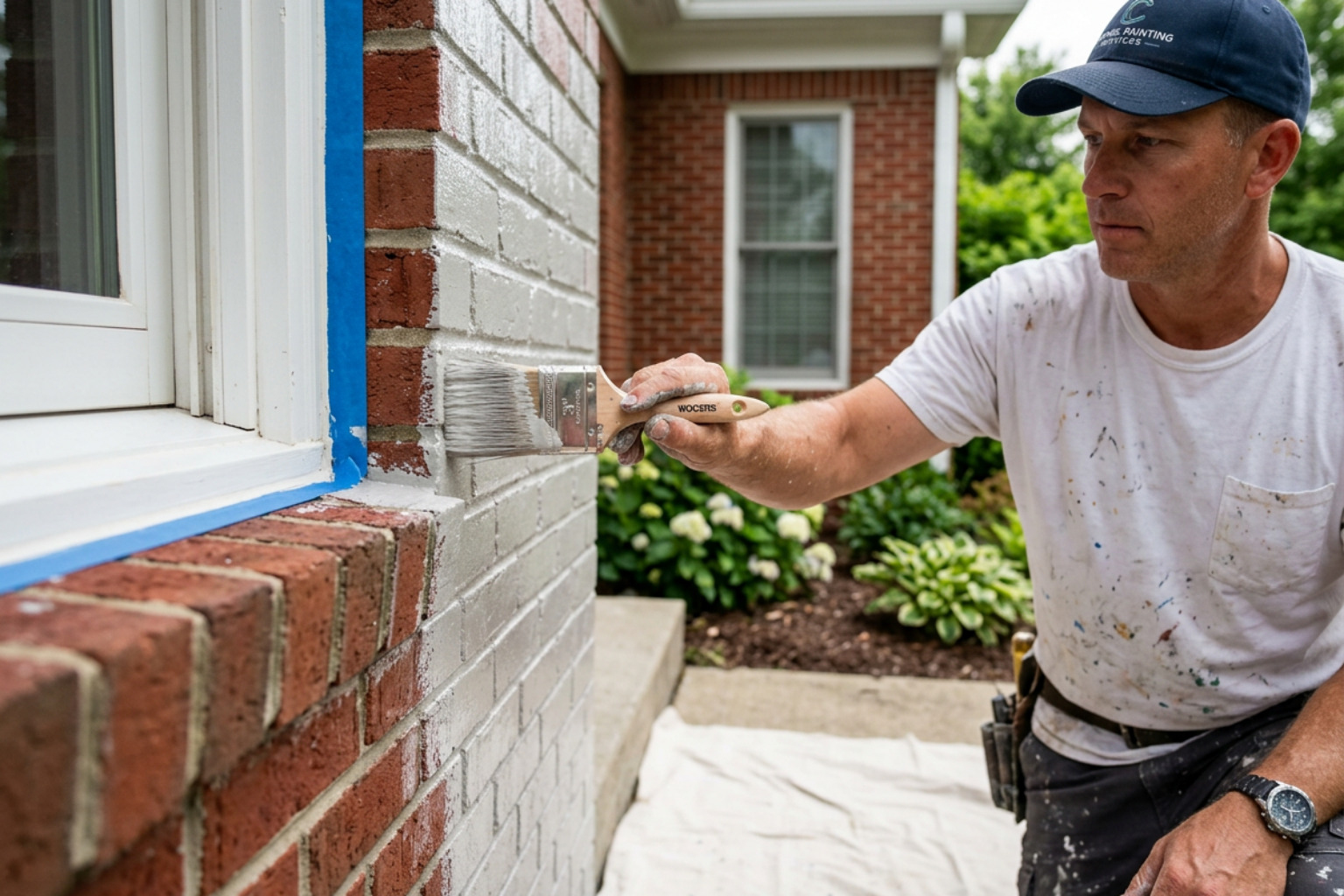
Brick is a highly textured surface with deep mortar joints. A standard roller won’t reach the “nooks and crannies.” We use thick-nap rollers, often 3/4-inch or 1-inch, to ensure full coverage. In many cases, we use airless spraying for the main body of the house to get the paint into every crevice, followed by “back-rolling” to work the paint into the pores.
We always apply a two-coat minimum. The first coat acts as a sealer, and the second coat provides the final color and protection. We pay close attention to cutting-in joints and ensuring that the transition between the brick and the trim is sharp and clean.
Color Selection and Light Reflectance Values
Selecting a color for your brick house exterior paint involves more than just picking a shade you like. You have to consider the Light Reflectance Value (LRV). LRV is a scale from 0 to 100 that measures how much light a color reflects.
| Color Name | Brand | LRV | Heat Absorption |
|---|---|---|---|
| Alabaster | Sherwin Williams | 82 | Low |
| Seapearl | Benjamin Moore | 77.95 | Low |
| Repose Gray | Sherwin Williams | 58 | Moderate |
| Iron Ore | Sherwin Williams | 6 | High |
High LRV colors like whites and light grays reflect more sunlight, which keeps the masonry cooler and reduces the thermal stress on the wall. Darker colors with low LRV, like deep charcoals, absorb more heat. In a climate like Carmel, this can lead to more significant expansion and contraction of the brick.
Popular Colors for Brick House Exterior Paint
White remains the most requested color for painted brick in Hamilton County. It provides a timeless, clean look that works well with the traditional architecture found in many Carmel neighborhoods. Alabaster by Sherwin Williams is a top choice because its LRV of 82 makes it bright without being sterile.
For those looking for a more modern, moody aesthetic, Iron Ore by Sherwin Williams is an excellent option for accents or even full-body applications on smaller homes. We also see an increase in earthy, organic tones like Ashwood Moss by Benjamin Moore, which blends beautifully with the lush landscaping common in Zionsville and Fishers.
Coordinating Trim and Accents
The brick is only one part of the equation. To get a high-end result, the trim, shutters, and doors must be coordinated. We often suggest a high contrast ratio. For example, Seapearl by Benjamin Moore on the brick paired with black window frames and wood accents creates a sophisticated, modern farmhouse look. Architectural highlights like gables or columns can be painted in a slightly different shade to add depth and interest to the home’s facade.
Long-Term Maintenance and Expected Lifespan
A professionally applied brick house exterior paint system should last between 7 and 15 years. The exact duration depends on the quality of the paint, the exposure to the elements, and how well the homeowner maintains the property. You can read more about local longevity factors in our article on How Long Does Exterior Paint Last on Carmel, Indiana Homes?.
Inspection and Touch-Up Requirements
We recommend that homeowners in Hamilton County perform a visual inspection of their painted brick every spring. Look for hairline cracks in the mortar joints or any signs of moisture bubbling under the paint. Catching these small issues early prevents them from turning into major peeling problems. Sealant reapplication around windows and doors should be done every 3 to 5 years to ensure the envelope remains watertight.
Cleaning Painted Masonry
Maintaining the look of your painted brick is relatively simple. We suggest a gentle cleaning once a year to remove dust and environmental pollutants. Use a mild detergent and a low-pressure garden hose. Never use a high-pressure washer on your own, as you can easily strip the paint or damage the surface. Regular cleaning prevents the buildup of mildew and keeps the color looking vibrant.
Frequently Asked Questions about Painting Brick
Is painting brick permanent?
Yes. Because brick is porous, the paint soaks into the surface. While there are chemical strippers and abrasive blasting methods to remove it, these are costly and rarely return the brick to its original, pristine state. You should only paint your brick if you are committed to the look for the long term.
How often does painted brick need to be repainted?
With high-quality materials and professional application, you can expect a 7 to 15 year cycle. Homes with heavy sun exposure or those in areas with high moisture may need a refresh sooner than those in more protected environments.
Does painting brick cause moisture problems?
It can if the wrong paint is used or if the brick is not properly prepared. We use breathable, vapor-permeable coatings that allow moisture inside the wall to escape as a gas. As long as the wall can “breathe,” you will not have moisture issues.
Conclusion
We understand that your home is your most significant investment. Painting your brick is a powerful way to update your property, but it must be done with precision and technical expertise. With over 25 years of experience serving Carmel, Fishers, and Zionsville, we have the local knowledge and craftsmanship required to deliver a finish that lasts.
If you are considering a brick house exterior paint project and want a professional, no-nonsense evaluation of your masonry, we are here to help. Contact us today for a detailed Estimate and let us help you protect and beautify your home for years to come.