Church painting in Carmel Indiana
Finding the right church painting contractors Indianapolis starts with hiring a crew that knows church work and understands Carmel properties. This is specialized painting, not standard commercial work. For church boards and property owners in Carmel, the quality of the prep, products, and scheduling matters as much as the final appearance.
- Verified experience with religious facilities, including sanctuaries, steeples, and historic exteriors
- Scheduling that works around services, events, and weekly building use
- Lead-safe and low-VOC paint practices for older buildings and sensitive occupants
- Proper access equipment for height work, including aerial lifts and fall protection systems
- Warranties that reflect the scope of church painting work, often with 5-year coverage
- Strong surface preparation, including washing, scraping, priming, and masonry sealing
- Insurance and background-checked crews before work begins
Church buildings require a different level of planning than most commercial painting projects. High ceilings, detailed trim, aging substrates, masonry, and active schedules all change how the work needs to be done. A qualified contractor brings the equipment, the labor, and the process to handle that without creating unnecessary disruption.
I am Todd Cartmel, founder of The Painting Edge. I have worked on church and commercial painting projects across Central Indiana since 1996, with Carmel remaining a primary focus. That experience matters because church painting usually comes down to the basics done right. Good prep, proper access, clear scheduling, and coatings that fit the building.
When we talk about commercial painting, church work stands apart because the buildings are heavily used and often historically significant. The painting itself is the main job. Supporting items only matter if they protect the finish or help the building perform better over time.
Interior church painting often includes sanctuaries, fellowship halls, classrooms, trim, doors, and high ceilings. In many cases, the priority is durable, low-odor coatings that hold up to regular use and allow the space to stay functional. Exterior church painting is just as demanding. It may involve brick and masonry coatings, wood preservation, steeple access, power washing, and weather-resistant paint systems suited to Indiana conditions. For older church buildings in Carmel, following National Park Service preservation standards is often part of doing the work correctly.
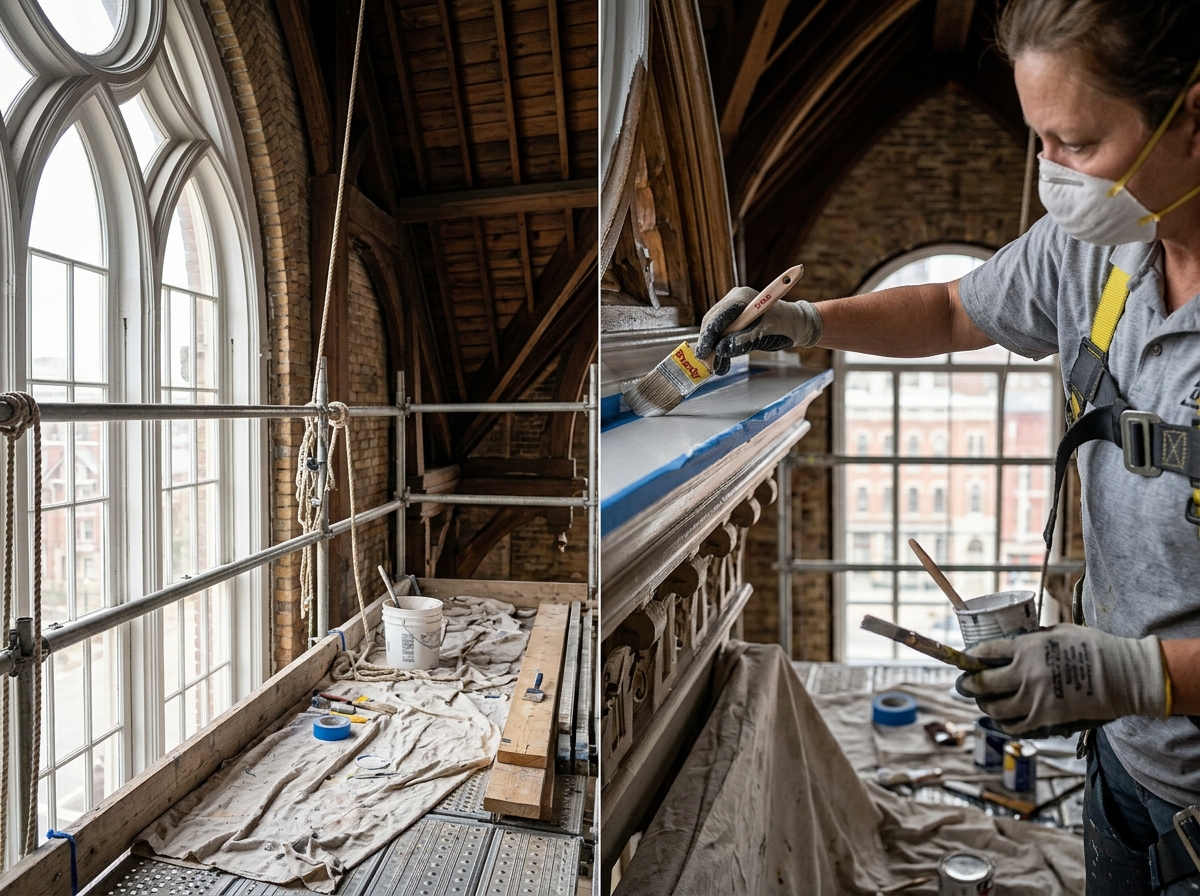
Historic church painting
Preserving a historic church starts with protecting the building. Paint is not just cosmetic on older structures. It helps shield wood, trim, and masonry from moisture, seasonal movement, and long-term deterioration.
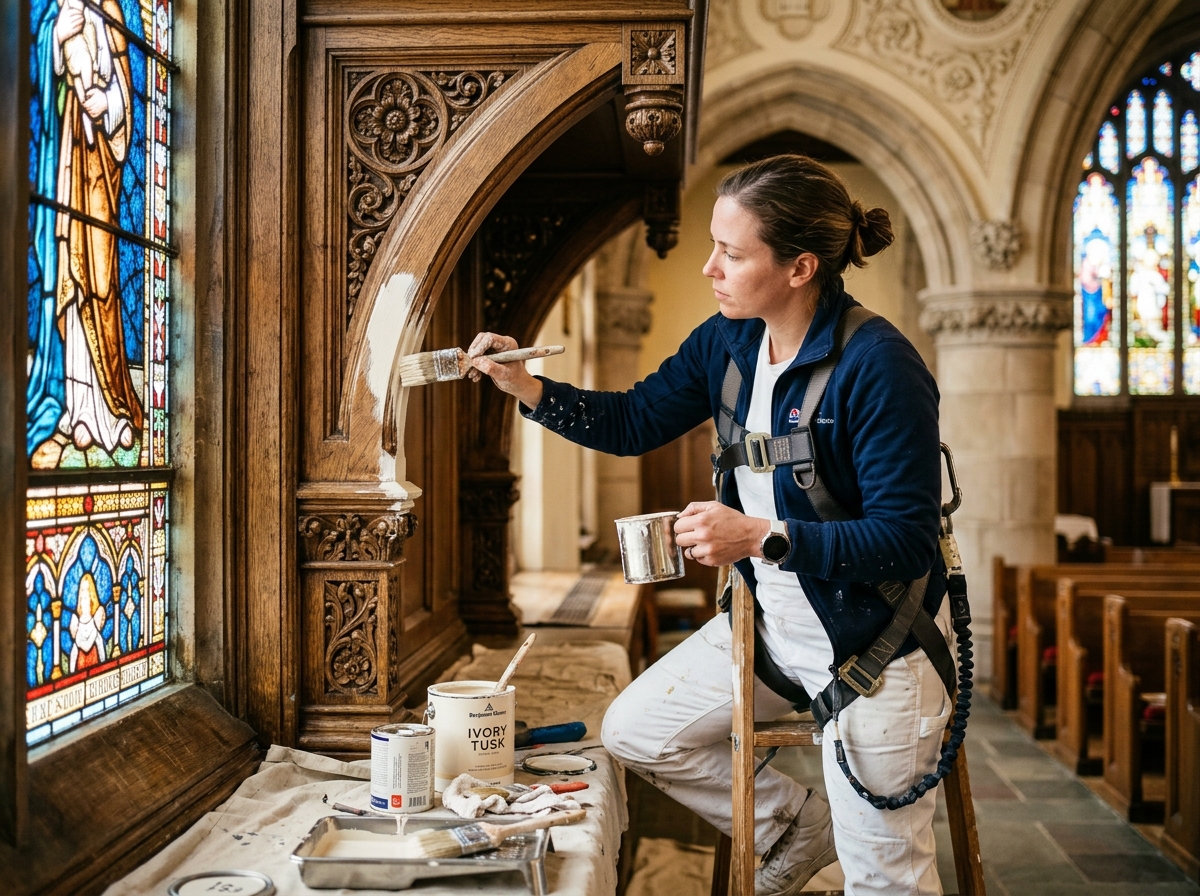
Many older churches in Carmel have original plaster, detailed millwork, stained trim, or decorative features that require careful handling. A professional crew needs to know how to prep and coat those surfaces without causing damage. The work has to respect the building and hold up over time. That is where experience matters. After nearly three decades in the field, we know that proper primers, sound prep, and the right finish system are what keep a historic space in service instead of pushing it toward larger repair work.
Church project experience
If you are reviewing church painting contractors Indianapolis property owners consider, look at direct experience with church painting in Carmel and nearby communities. This type of work is different from standard office or retail repainting. The contractor needs to understand older substrates, access issues, scheduling around services, and the level of care expected inside a worship space.
Over the past 25 plus years, we have worked on projects ranging from small chapels to large sanctuaries across Central Indiana, with a strong focus on Carmel. That background matters when the project involves steeples, sanctuary ceilings, detailed trim, or restoration work. Ask for examples of church painting projects in Carmel, Fishers, Zionsville, and Westfield. A contractor who has handled older church buildings before will approach the job differently from one focused mainly on new commercial shells.
Church painting challenges
Church painting comes with practical problems that need to be handled correctly. Height is usually the first one. Steeples, domes, and vaulted ceilings require proper lift access, fall protection, and crews trained to work safely above occupied spaces.
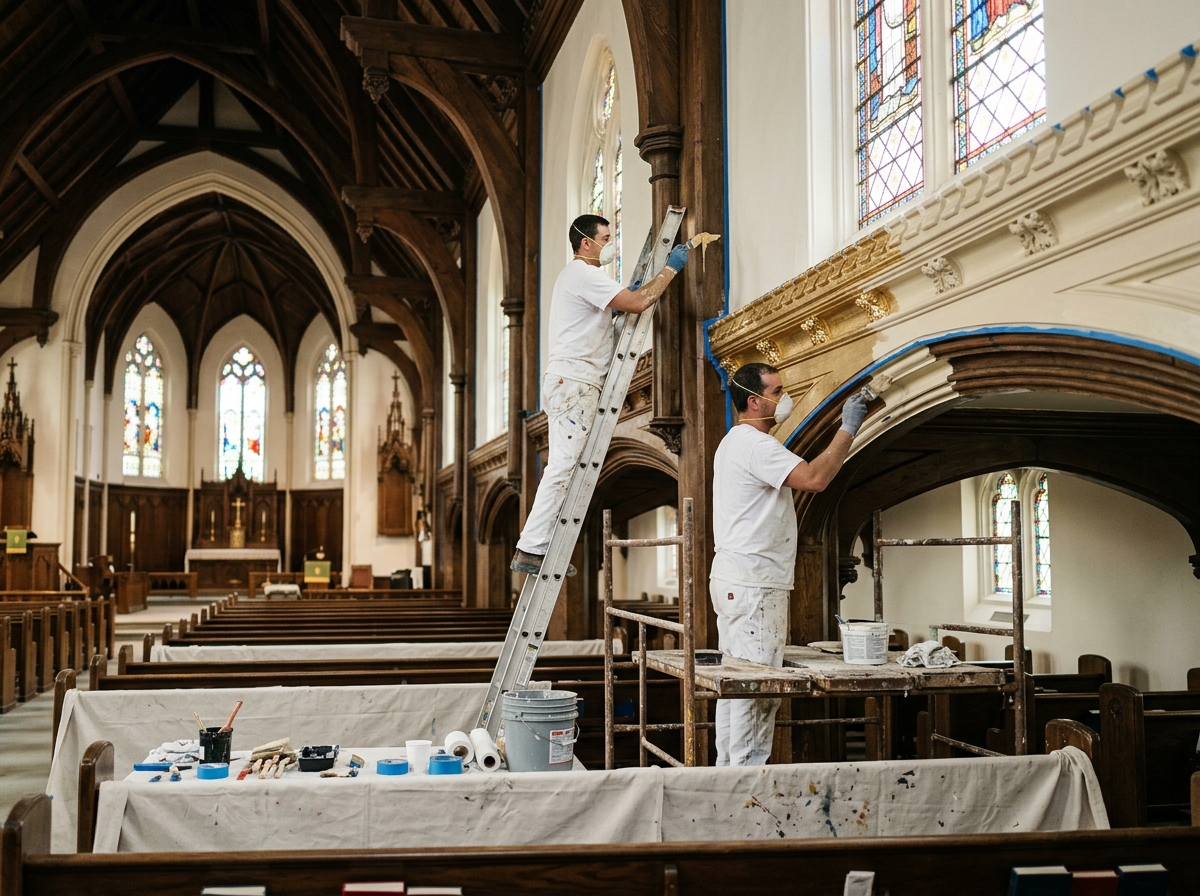
Protection is the next issue. Pews, flooring, trim, and fixtures all need to be covered and worked around carefully. Then there is scheduling. Most churches in Carmel are in use throughout the week, not just on Sundays. Services, classes, events, weddings, and rehearsals all affect the production plan. A professional painting crew has to work around that schedule, keep the space clean, and leave it ready for use at the end of each work period.
Surface preparation and lead-based paint
In many of the older churches found in the northern Carmel area and Hamilton County, lead-based paint is a reality for buildings constructed before 1978. Handling this requires lead-certified teams who follow strict safety protocols to prevent contamination. This is not a place to cut corners; the health of your smallest congregants in the nursery depends on proper lead-safe practices.
Surface preparation is the most time-consuming part of a quality job. It involves power washing to remove years of environmental grime, followed by scraping, sanding, and priming. For historic windows, glazing and specialized caulking are often necessary to seal out the Indiana wind. Without this foundational work, even the most expensive paint will fail within a few seasons. We emphasize a “prep-heavy” approach because we know that the durability of the finish is only as good as the surface beneath it.
Interior and exterior painting options
For church interiors, the main goal is a durable finish with as little disruption as possible. That is why we usually recommend low-VOC or zero-VOC products for sanctuaries, classrooms, hallways, and gathering spaces. These coatings reduce odor and help keep the building usable during the project. In high-traffic areas, scuff-resistant finishes make more sense because they hold up better and reduce how often repainting is needed. You can learn more about our interior painting work here.
For exterior painting, product selection has to match the material and the weather exposure. In Carmel, that means using coatings that can handle freeze-thaw cycles, moisture, and UV exposure. Masonry needs breathable systems. Metal components need the right primers and topcoats. Wood trim and soffits need proper prep and coatings that protect against failure at joints and edges. Whether the building is modern or historic, the quality of the exterior painting system determines how long the work lasts.
Scheduling around worship services
The biggest concern for most church boards is disruption. Will we be able to hold our Wednesday night service? is a common question. A professional contractor builds their production schedule around your calendar. This often means performing off-hours work.
Our process involves establishing secure work zones and protective barriers so that even if a project is mid-way through, the sanctuary remains respectful and safe for visitors. Daily cleanups are mandatory. We treat the church with the same care we would a private home, ensuring that tools are tucked away and dust is minimized before any scheduled event. Communication is the key here; we provide constant updates so leadership knows exactly which areas are in play at any given time.
Warranties safety and insurance
You should never hire a contractor for a church project who cannot produce a current insurance certificate and proof of background checks for their crew. These are sacred spaces, and the safety of the congregation is paramount. Reputable church painting contractors Indianapolis should provide a workmanship warranty.
While a standard commercial warranty might cover three years, we often see extended five-year warranties for church-related work. This reflects the confidence the contractor has in their prep work and material selection. Additionally, ensure the contractor uses in-house employees rather than unvetted subcontractors. This ensures a consistent level of quality and accountability from the first bucket of paint to the final walkthrough.
Church painting costs
Church painting costs depend on the actual conditions of the building and the scope of the work. The biggest cost drivers are usually access, surface condition, and the level of detail involved.
If the project requires lifts for a steeple, high sanctuary ceiling, or other elevated work, labor and equipment costs increase. If the existing paint is failing or the substrates need substantial prep, that also adds time. Material choice matters too. Low-VOC interior products, high-durability coatings, and specialty systems for masonry or metal all affect the final number. Detailed trim and multi-color historic schemes also take more labor than broad wall areas with a simple finish. On church painting projects in Carmel, the price usually comes down to how much preparation and technical access the building requires.
Testimonials and case studies
When you review church painting case studies, pay attention to the basics. Was the crew professional. Did they keep the site clean. Did they stay on schedule. Did the work hold up. Those are the things that matter on a church project.
In higher-level restoration work, the standard is even stricter. Some projects involve fire damage, historic finishes, or decorative elements that have to be matched closely. That kind of painting requires real experience, not just general production capability. The same applies to everyday church repainting in Carmel. Property leaders usually remember the contractor who communicated clearly, respected the building, and delivered the work without creating unnecessary problems.
Choosing a contractor
Choosing among church painting contractors Indianapolis property owners find starts with a clear site visit and a written scope. A professional contractor should walk the building with you, identify surface issues, explain what prep is required, and outline how the painting will be scheduled.
Ask for references from churches, especially in Carmel when possible. Ask whether the crew stayed on schedule, kept the building clean, and handled the work professionally. The proposal should clearly define the scope, materials, access plan, and protection measures so there is no confusion later. You can find more about our approach on our services page.
Service areas
Our primary service area is Carmel, Indiana. That includes church and commercial painting projects throughout Carmel, along with select work in nearby Hamilton County communities.
We serve the following areas.
- Carmel: Our primary market, including historic properties and larger church campuses.
- Fishers: Church and commercial painting for established and newer facilities.
- Zionsville: Projects with a strong focus on preservation and detailed finishes.
- Hamilton County: Broader commercial painting services for religious facilities and other properties.
Keeping our work centered on Carmel allows us to stay responsive and maintain close oversight on projects. We have been serving Central Indiana since 1996, and that long track record is part of why local property owners continue to trust us with complex painting work.
If your church property needs a professional evaluation, reach out for an assessment. For more information on commercial painting services, visit The Painting Edge Commercial Painting.