What to Do When Water Damages Your Drywall
Drywall repair after water damage is one of the most time-sensitive home repairs you can face. Here is what the process involves at a glance:
- Stop the water source before touching the drywall
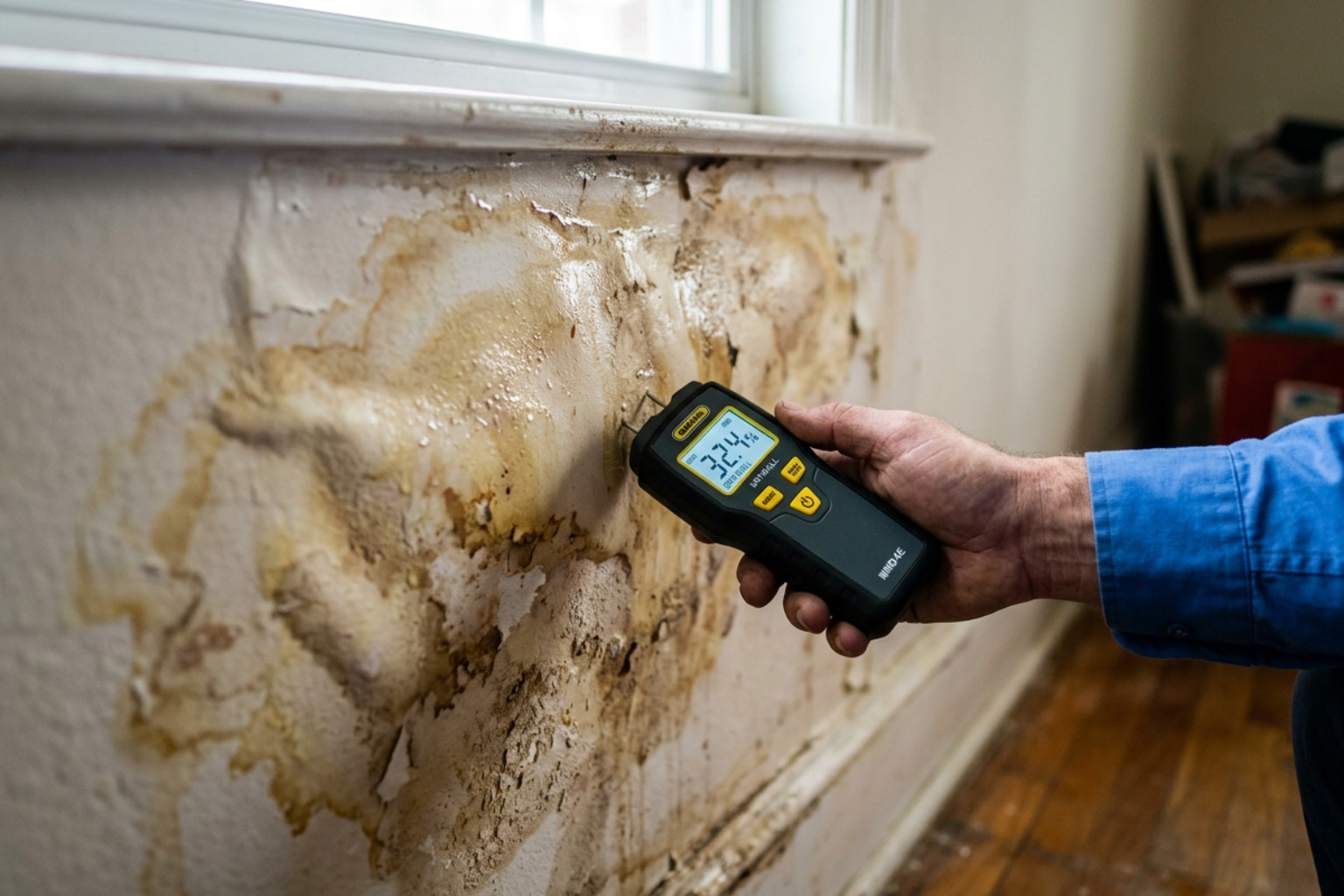
- Assess the damage using a moisture meter (readings above 20% indicate a serious problem)
- Dry the area completely with fans and dehumidifiers (typically 3-5 days with professional equipment)
- Remove damaged drywall if it is soft, sagging, moldy, or has been wet for more than 48-72 hours
- Replace insulation if it absorbed water
- Install new drywall, tape, mud, and sand the seams
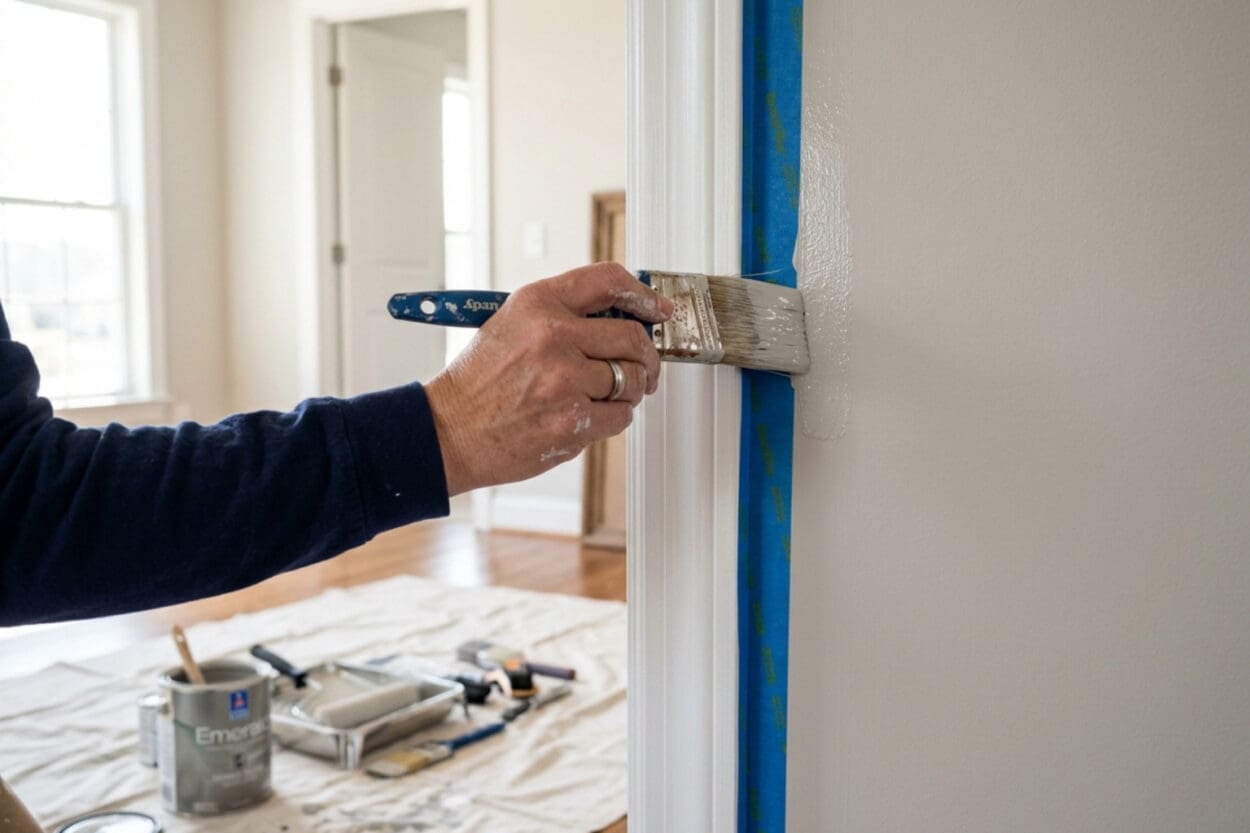
- Prime with a stain-blocking primer, then paint to match
The clock matters here. Mold can begin growing on wet drywall within 24 to 48 hours. Acting fast is not optional.
Water damage looks bad on the surface, but what you cannot see is often worse. Moisture wicks upward through gypsum board well beyond the visible stain line, and hidden mold can grow on the back side of drywall long before you notice anything from the front.
Over nearly three decades of painting and drywall work across Carmel and central Indiana, we have seen how improper drywall repair after water damage leads to mold problems, failed finishes, and costly do-overs. Let us walk you through exactly how this should be handled.
Identifying the Scope of Water Damage
When we walk into a home in Carmel or Fishers after a pipe burst or a roof leak, the first thing we do is look past the obvious coffee-colored stains. Drywall is a porous material. It is essentially a sandwich of gypsum plaster between two layers of heavy paper. Because of this structure, it acts like a sponge.
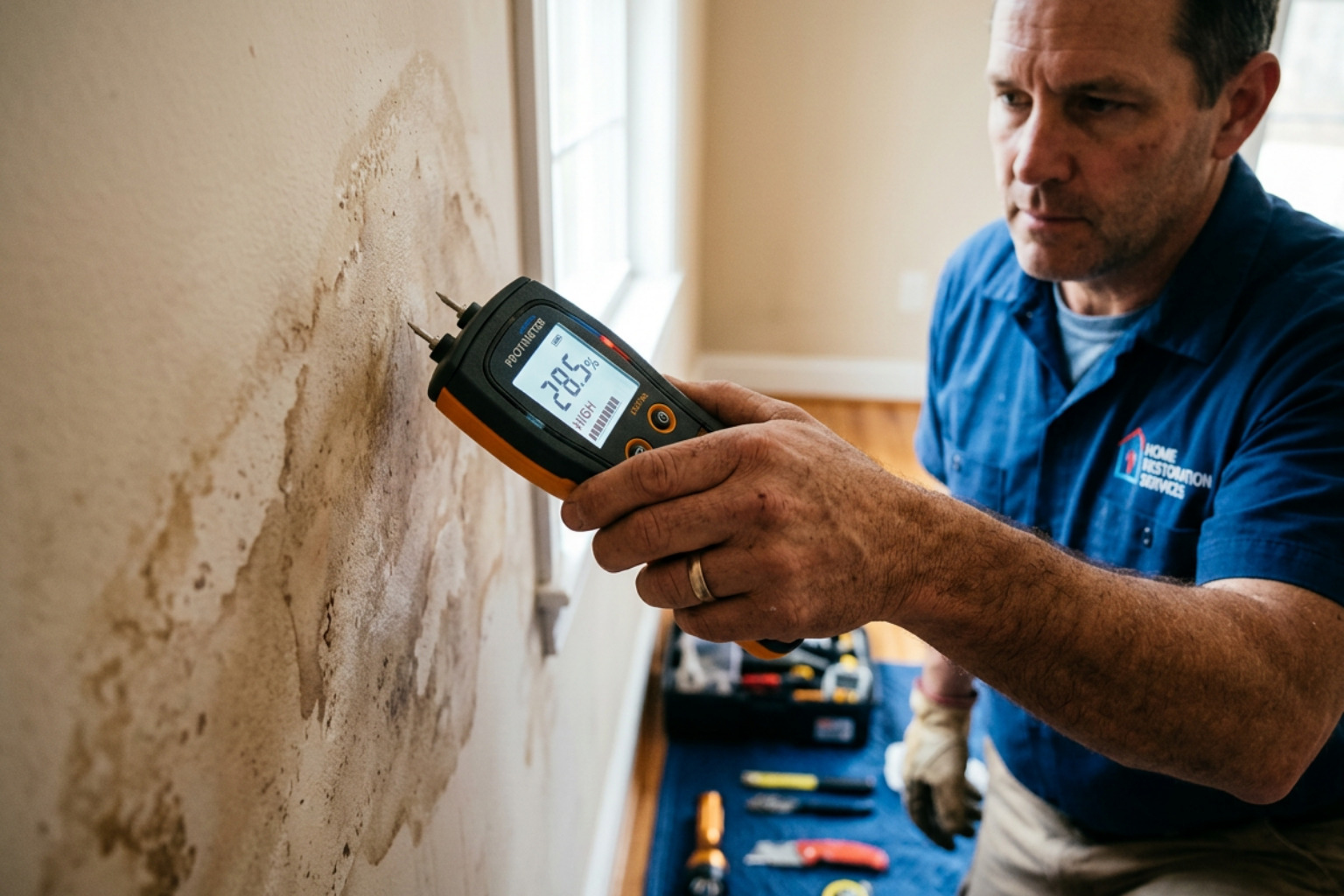
We use professional moisture meters to determine the actual reach of the water. This is critical because of capillary action. Water can wick 12 to 24 inches upward from the floor or outward from a leak site. If the moisture reading is above 20 percent, the material is holding enough water to support mold growth. In our experience, drywall that stays this wet for more than 48 hours is usually a candidate for removal rather than a simple patch.
There are specific signs that tell us the integrity of the wall is gone. If the drywall is soft to the touch, crumbling, or sagging, it has lost its structural bond. In ceilings, sagging is particularly dangerous. If a ceiling panel has sagged 3/8 of an inch or more, it is at high risk of collapsing. We also look for bubbling paint and musty odors, which are the primary indicators that moisture is trapped behind the surface.
| Sign of Damage | Action Required |
|---|---|
| Surface staining only (Moisture < 15%) | Dry, prime with stain-blocker, and paint |
| Soft or spongy texture | Remove and replace section |
| Visible mold growth | Professional remediation and replacement |
| Sagging ceiling (> 3/8 inch) | Immediate removal and structural check |
| Category 2 or 3 water (Sewage/Grey water) | Full replacement of all affected materials |
Safety and Stabilization Before Drywall Repair
Before any drywall repair after water damage begins, we ensure the environment is safe. This starts with identifying the water source. There is no point in finishing a high-end paint job if the upstairs master bath is still slow-leaking. Once the leak is stopped, we address the electrical system. If water has run down inside a wall cavity, it may have contacted outlets or switches. We often advise homeowners to have a licensed electrician verify the circuits before we start cutting.
Safety equipment is a non-negotiable part of our process. When we disturb water-damaged drywall, we are often dealing with dust and potential mold spores. Our teams use professional PPE, including P100 respirators, gloves, and eye protection. Having proper PPE not only blocks mold spores and dust but also keeps irritants from contacting your skin. For more details, check OSHA guidance on mold remediation.
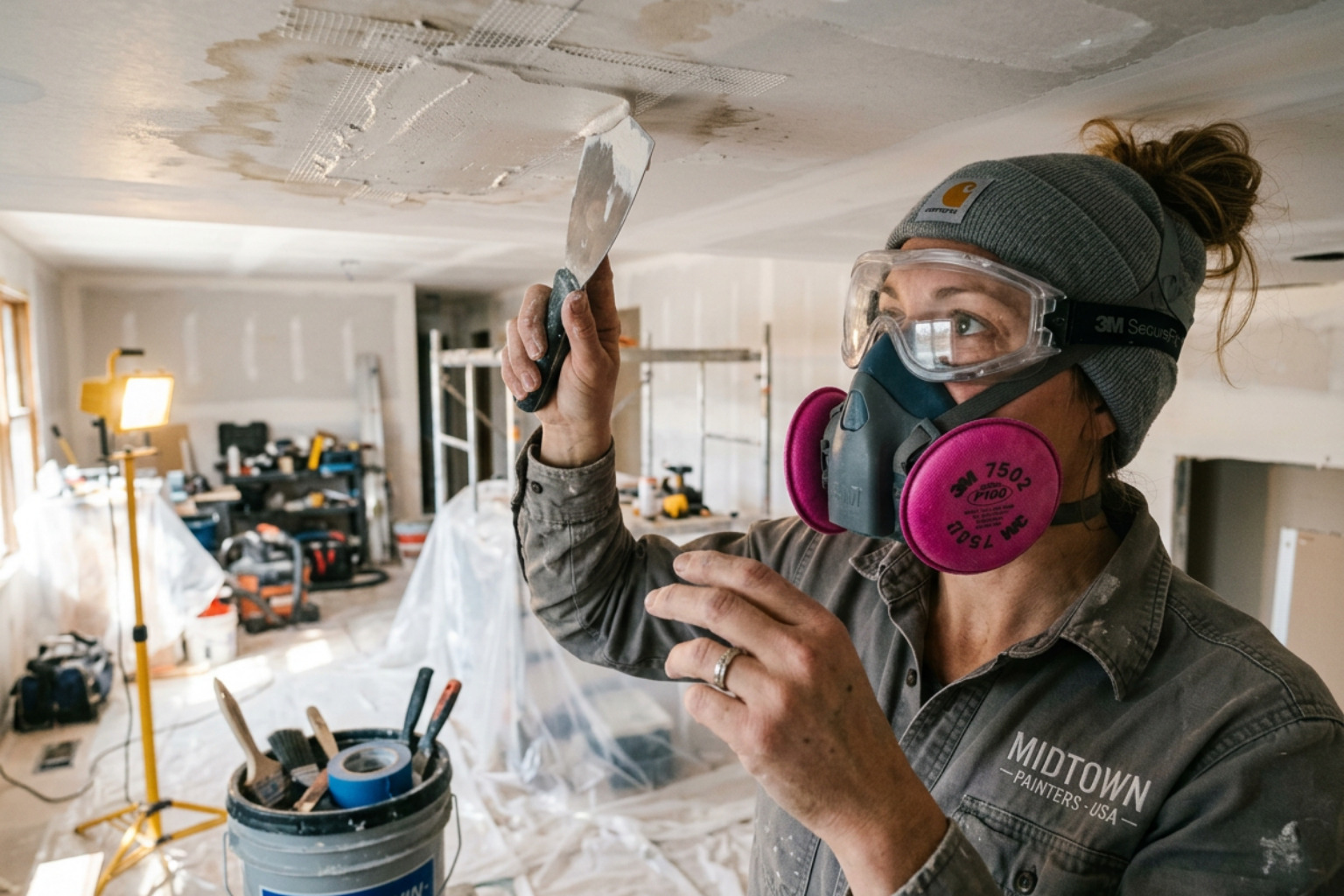
If mold is present and covers more than 10 square feet, the project shifts from a standard repair to a professional remediation. We set up containment zones using heavy-duty plastic sheeting to prevent spores from traveling to other parts of your Carmel home. We also use high-capacity air movers and commercial-grade dehumidifiers to stabilize the humidity. The EPA recommends keeping indoor relative humidity below 60 percent, and ideally between 30 and 50 percent, to prevent mold from returning.
Professional Standards for Drywall Repair After Water Damage
In cases of basement flooding or significant pipe failures, we often utilize the flood cut technique. This involves removing a uniform strip of drywall, usually 12 to 24 inches above the visible waterline. We do not just cut where it looks wet. We cut where the moisture meter tells us the wicking has stopped.
A flood cut allows us to inspect the wall cavity. We check the wooden studs for rot or mold and ensure the sub-floor is drying properly. This is also when we remove and replace saturated insulation. Fiberglass batts lose their R-value when they get wet and they become a primary breeding ground for mold. We follow the EPA mold and moisture guide to ensure the drying process is thorough. We do not install new materials until the moisture level in the wood framing is below 15 percent and the remaining gypsum is under 1 percent.
Determining When to Replace Drywall After Water Damage
Not all water is equal. If the water came from a clean source, like a supply line, the drywall might be salvageable if dried quickly. However, Category 2 water (grey water from a dishwasher or washing machine) or Category 3 water (black water from sewage or outdoor flooding) requires immediate removal of the drywall regardless of how it looks. The porous core of the gypsum traps contaminants that cannot be cleaned out.
When mold growth exceeds 10 square feet, or if the drywall has begun to warp and pull away from the fasteners, replacement is the only way to ensure a long-term result. Our Drywall Repair services focus on removing these compromised sections entirely to protect the health of the home.
Technical Steps for Drywall Repair After Water Damage
Once the area is dry and the studs are inspected, we begin the reconstruction. We cut the replacement pieces to fit the opening, ensuring the edges land on the center of the wall studs. If a stud is not available at the edge of the cut, we install furring strips or wood backing to provide a solid attachment point. This prevents the new patch from cracking later.
Proper fastener spacing is essential for a professional finish. We typically place screws every 12 inches on walls and every 8 inches on ceilings. We stagger the joints of the drywall sheets to increase the strength of the wall. This technical precision is what allows for a seamless transition between the old and new sections. For more complex projects, our Drywall Hang & Finish team ensures every sheet is level and secure.
Painting and Finishing for a Seamless Result
The most visible part of drywall repair after water damage is the finish. In Carmel, where home standards are high, a visible patch is unacceptable. After the drywall is hung, we apply three thin coats of joint compound. We feather the edges outward with progressively wider knives, which tricks the eye into seeing a perfectly flat surface.
Before any paint is applied, we use a high-quality, stain-blocking primer. Standard latex primers will not stop water stains from bleeding through. The tannins in the water stain will migrate through the new paint unless they are sealed with an oil-based or specialized acrylic primer. This step is non-negotiable for a professional result.
Texture matching is where many repairs fail. Whether your home has a smooth finish, orange peel, or knockdown texture, we take the time to replicate the existing pattern. This requires a steady hand and an understanding of how different sprays and brushes behave. For a deeper look at how we handle these details, see Cracks and Holes and Imperfections Oh My! Your Guide to Drywall Repair in Carmel. Once the texture is matched and primed, we paint the entire wall from corner to corner to ensure the color and sheen are perfectly consistent.
Frequently Asked Questions about Water Damaged Drywall
How long does it take for drywall to dry after water damage?
With professional drying equipment, including high-velocity air movers and LGR dehumidifiers, drywall typically reaches safe moisture levels within 3 to 5 days. Without professional help, it can take a week or more, which significantly increases the risk of mold growth. We always recommend monitoring the process with a moisture meter rather than relying on how the surface feels to the touch.
Can you paint over water stains without repairing the drywall?
We strongly advise against this. Painting over a water stain without confirming the drywall is dry and structurally sound only hides the problem. If the drywall is still damp, the paint will trap that moisture, leading to mold growth behind the paint film. Even if it is dry, a standard paint will not hide the stain. You must use a stain-blocking primer, and you should only do so if the drywall is not soft or crumbling.
Does homeowners insurance cover drywall replacement after a leak?
In many cases, yes. Most standard homeowners insurance policies cover water damage that is sudden and accidental, such as a burst pipe or a failed water heater. However, damage caused by long-term neglect or lack of maintenance is often excluded. We recommend documenting the damage with photos and keeping any failed plumbing parts for the adjuster to inspect. We frequently work with homeowners in Hamilton County to provide the necessary documentation for their claims.
Conclusion
Dealing with water in your home is stressful, but the repair process does not have to be. We have spent 25 years perfecting the art of restoration in Carmel, Zionsville, and Fishers. We understand that a quality repair is about more than just a coat of paint. It is about ensuring the structural integrity of your walls and the health of your indoor environment.
Our commitment to excellence means we do not take shortcuts. From the initial moisture assessment to the final brushstroke, we treat your home with the respect it deserves. If you are facing a soggy mess and want a result that lasts, it is worth considering why so many of your neighbors trust professional services with their homes. You can learn more about this philosophy here: Why Are Carmel Homeowners Choosing Professional Drywall Repair Over DIY?.
When you are ready to restore your home to its original beauty, Drywall Repair Services are here to help. We provide the steady, professional hand needed to turn a disaster back into a home.