Kitchen Cabinet Refinishing Kit Realities
A kitchen cabinet refinishing kit is a retail product system designed for homeowners to refresh their cabinets without full replacement. While these kits are marketed as a simple solution, the results depend on the technical reality of the surface and the application method. In Carmel, property owners often look for a finish that matches the high standard of their homes. This guide looks at how these kits perform compared to professional painting standards.
My name is Todd Cartmel. I founded The Painting Edge in 1996. With nearly thirty years in the field, I have seen which finishes hold up and which ones fail within a year. That experience includes a thorough understanding of where a kitchen cabinet refinishing kit fits into the picture and where it falls short.
The main issue is that cabinets are not like walls. Cabinet surfaces are handled every day, exposed to steam, grease, water, and repeated cleaning. A finish that looks fine for a week can start wearing at edges, around pulls, and near sinks if the coating system is not built for that kind of use. That is why cabinet painting has to be judged by adhesion, film hardness, and long-term cleanability, not just by color on day one.
In Carmel homes, cabinet refinishing is often part of keeping a kitchen current without changing a sound layout. That can make sense when the boxes are solid and the door style still fits the home. But the quality of the result comes down to process. A retail kit may help with a basic color change, yet it usually does not address the deeper issues that determine whether the finish will last. That is where the gap between a kit and a professional cabinet coating becomes obvious.
Cabinet Surface Compatibility in Carmel

When we assess a kitchen in Carmel, we start with the substrate. A kitchen cabinet refinishing kit is often sold as a universal fix, but different materials require specific technical approaches. Wood, laminate, and melamine all react differently to coatings. Solid wood is the most reliable surface for a new finish. Many homes in Hamilton County use laminate or melamine, which are non-porous. Without a proper chemical bond, paint will not adhere correctly. If the underlying structure is failing, a kit is only a temporary mask. If your boxes are sturdy but you want a new look, a professional coating is the right path. You can read more about this in our guide on Should Carmel Homeowners Paint Kitchen Cabinets or Replace Them?.
Adhesion is the most critical part of any cabinet project. For wood cabinets, especially oak, the grain is deep. A standard kitchen cabinet refinishing kit might change the color, but it will not hide the heavy texture of the wood grain. Laminate and melamine present a different challenge. These materials are essentially plastic. Every surface needs some level of mechanical abrasion to ensure a bond. Thermal foil cabinets are particularly tricky. If the plastic coating is already peeling or cracking due to heat exposure, a refinishing kit will not fix it. The foil must be removed or the door replaced before any professional painting can happen.
Kitchens are high-grease environments. Even if you cannot see it, there is a layer of cooking oils and skin oils from hands touching the handles. If you paint over that grease, the paint will not stick. We use a multi-step cleaning process with heavy-duty degreasers to ensure a chemically clean surface. After cleaning, we suggest a light scuff sand. You are not trying to remove the old finish entirely. You are just trying to take the shine off so the new bond coat has something to grab. For more detailed insights, you can review these Pro Tips For Painting Kitchen Cabinets to see how professionals approach the prep work.
Surface compatibility also affects how the finished kitchen will look, not just whether the paint sticks. On open-grain woods, the pores remain visible unless extra filling work is done before primer and finish coats. On laminate and melamine, the challenge is the opposite. The surface is smooth, but the bond is less forgiving. If prep is rushed, failure usually starts at corners, around knobs, and along lower cabinet rails where hands and shoes make contact.
In older Carmel kitchens, we also see mixed materials in one room. The face frames may be wood, the doors may be veneer, and the end panels may be laminate. A kitchen cabinet refinishing kit does not account for those differences very well. A professional cabinet painting process does. Each part has to be evaluated so the primers, sanding methods, and finish coats work together as one system. That level of planning is what separates a short-term improvement from a finish that still looks right years later.
Durability of Cabinet Finishes

The durability of a kitchen cabinet refinishing kit is limited by its chemical makeup. Most retail kits use water-based formulas for ease of use. These products often lack the hardness of industrial coatings. A satin finish is the standard for professional cabinet painting because it balances aesthetics with maintenance. In a busy Carmel kitchen, the finish must withstand moisture and heat. Professional-grade coatings reach full cure much faster than retail options. To understand the technical data of quality products, you can Download product MSDS for specific technical data.
In Carmel and Zionsville, we deal with significant humidity fluctuations. This is a major factor when using any coating. If the humidity is too high, the paint will stay tacky for a long time and may not cure properly. If it is too cold, the paint will not flow out smoothly, leading to visible brush marks. Most kits offer a 24-hour window before you can reattach the doors, but dry to the touch is not the same as fully cured. It can take up to 30 days for a water-based retail finish to reach its full hardness. During that first month, you have to be extremely careful not to scrub the cabinets. Good ventilation is required throughout the process to help the moisture evaporate and speed up the curing time.
Coverage is another area where retail systems often look better on the box than they perform in a real kitchen. Cabinet layouts include face frames, rails, stiles, backs of doors, drawer fronts, end panels, and trim details. That means the paintable surface area adds up fast. A kitchen cabinet refinishing kit may list a square-foot coverage number, but those estimates are usually based on flat surfaces. Raised panel doors and detailed profiles consume more material and more labor. Once that happens, color consistency and film build become harder to control.
Durability is not just about resisting scratches. It is also about how the finish handles routine cleaning, food splatter, hand oils, and the repeated impact of soft-close doors and drawers. In a high-use kitchen, the first weak points are usually around handles, sink bases, and lower cabinet corners. A softer coating can burnish, stain, or wear through in those spots. That is why cabinet painting has to be treated as a specialty coating project, not as a simple repaint.
The Indiana climate matters more than many property owners expect. Seasonal moisture changes in Hamilton County affect drying, curing, and even how wood components move. If doors are coated under poor conditions, the finish can level unevenly or remain vulnerable longer than expected. Professional cabinet painters control those variables as much as possible because a good finish is not just applied. It has to cure in the right environment to reach its intended performance.
Professional Standards for Cabinet Painting
There is a significant gap between a DIY kit and the professional Kitchen Cabinet Coating we provide at The Painting Edge. A kitchen cabinet refinishing kit relies on brushes and rollers, which leave visible texture. Professionals use high-volume low-pressure sprayers to create a smooth, factory-like finish. We use industrial coatings that are not found in retail stores. These products offer better resistance to stains and cleaning chemicals. Refinishing a kitchen is labor-intensive. We have spent nearly thirty years refining a process that minimizes disruption to your Carmel home while ensuring a result that lasts for a decade.
Professional standards start before any finish coat is opened. Doors and drawer fronts need to be removed, labeled, and handled in a way that keeps the installation organized when the project is complete. The surfaces have to be cleaned thoroughly, sanded correctly, and primed with products matched to the specific substrate. If any of those steps are skipped or rushed, the final coat cannot make up for it. That is true whether the cabinets are painted white, deep gray, or another color that shows surface defects more clearly.
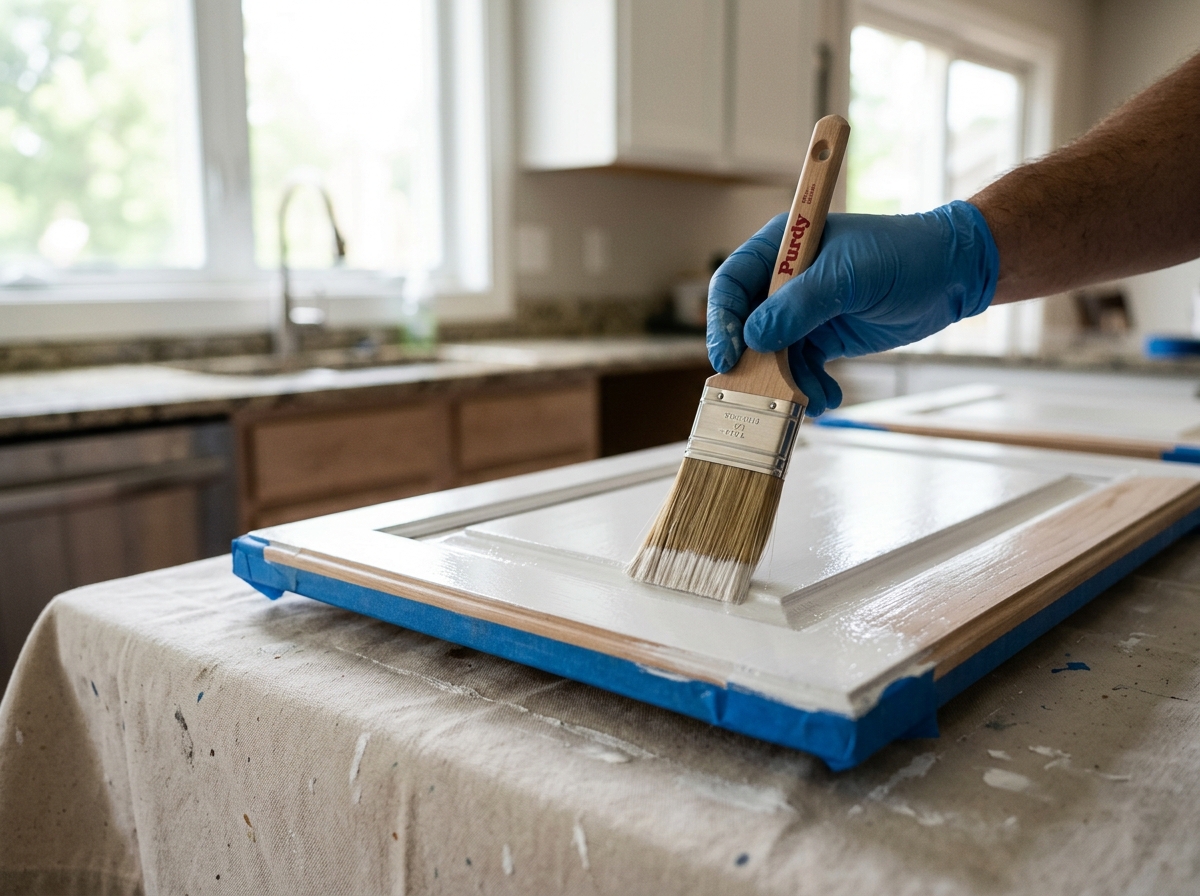
Application method also matters. A sprayed finish lays down more evenly and produces a smoother film than a brush and roller system. On cabinet doors, that difference is easy to see in reflected light. Brush marks, stipple, and heavy edges tell you the coating was not applied to a cabinet standard. In high-end Carmel homes, those details stand out. Property owners notice them every day because cabinets sit at eye level and carry most of the visual weight in the kitchen.
The other difference is product performance over time. Professional cabinet coatings are formulated for harder use and better chemical resistance. They are built to handle normal cleaning without softening or wearing prematurely. That matters in a family kitchen where surfaces are touched constantly. Our work at The Painting Edge is centered on professional painting, and cabinet work follows the same standard we bring to interior and exterior painting projects across Carmel and Hamilton County. The goal is a finish that looks right, cleans up well, and stays that way.
Common Questions about Cabinet Refinishing
How long does the professional process take?
A professional cabinet painting project in Carmel typically takes less time than a DIY attempt because of our specialized equipment. While a kit might take a homeowner a week or more, our team works efficiently to restore your kitchen quickly.
Do these projects require a topcoat?
Professional-grade coatings often have the protective properties built into the finish. Some retail kits require a separate topcoat to prevent staining, but industrial finishes are designed for high-traffic durability.
Can laminate cabinets be painted?
Yes, laminate and melamine can be painted if the surface is prepared correctly. This requires more than just a kit. It requires proper cleaning and a specific bonding process to ensure the paint does not peel off the plastic surface.
Final Thoughts on Cabinet Refinishing
A kitchen cabinet refinishing kit can provide a basic update, but it rarely meets the standards of a high-end Carmel property. For a flawless and durable finish, professional expertise is necessary. At The Painting Edge, we bring three decades of experience to every project in Hamilton County. We understand the local climate and the technical requirements for a long-lasting result. If you want to ensure a professional-grade finish for your home, we are ready to help. You can Get a professional kitchen cabinet coating by contacting us today. We serve Carmel, Zionsville, and Fishers with a commitment to quality work.
For many homeowners, the real question is not whether a kitchen cabinet refinishing kit can change the color. It can. The real question is whether it can deliver a finish that fits the rest of the home and still performs after daily use. In our experience, that is where most retail systems fall short. Cabinets demand the same level of discipline as any other high-visibility painting project, and usually more.
Carmel property owners tend to value clean lines, durable materials, and work that does not have to be redone in a year or two. That is the standard we work to at The Painting Edge. After nearly thirty years serving central Indiana, we know that good cabinet painting comes from sound preparation, the right coating system, and a controlled application process. If your cabinets are structurally solid and you want a professional result that fits your home, a proper cabinet coating is the practical path.